
About
What is a great America? Has America Ever Been Great? When and How Great?
Since the 2024 presidential election of Trump, many in the U.S are discouraged and upset about actions that all three branches of government have taken. Policies have been and continue to be adopted that harm many.
In the beginning of the second Trump presidency, the concern about multiple serious issues has grown, and America does not seem to be making progress in reducing problems that reduce the quality of life for many. Trump campaign’s slogan, “Make America great again” seems like a lie, a false promise.
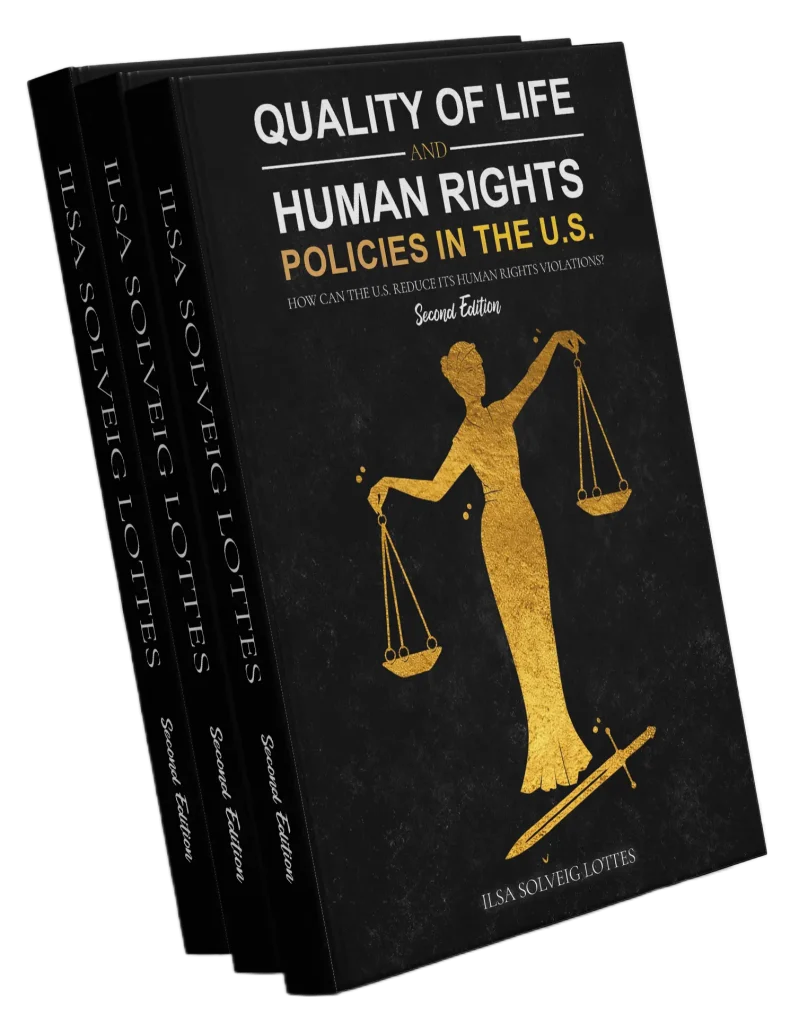
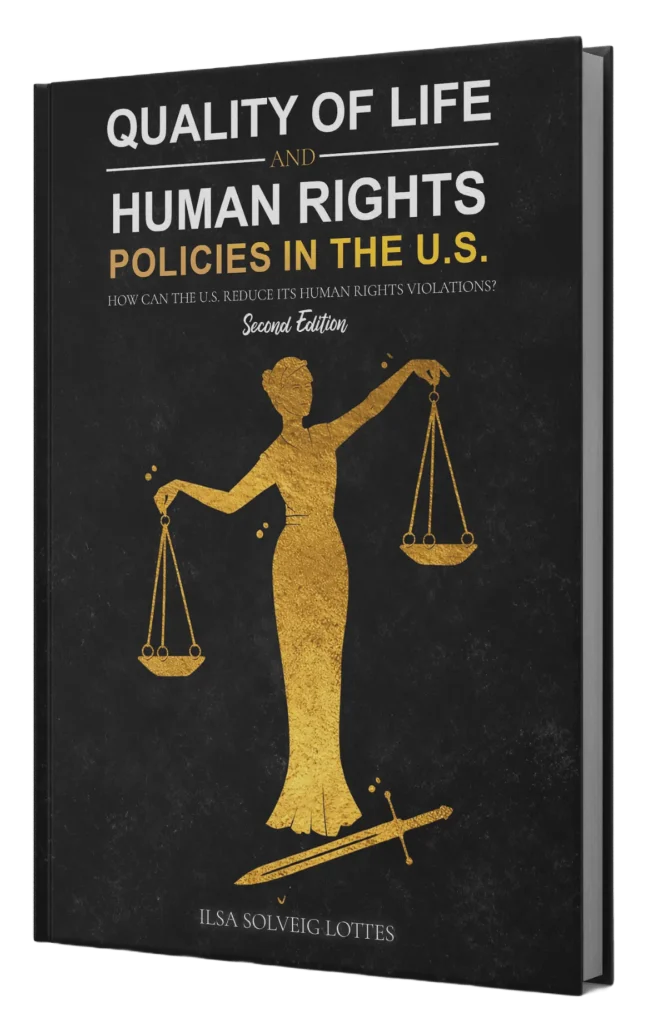
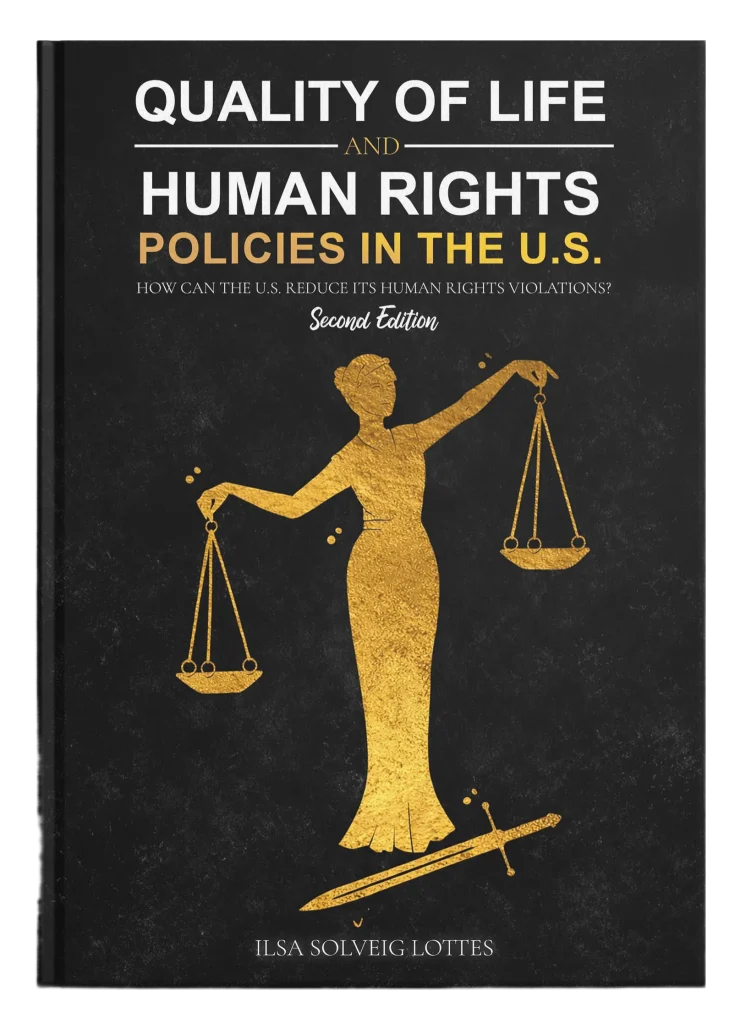
The American Dream now seems impossible for groups with specific characteristics. What would make America great and what policies would result in a better quality of life for more Americans? I have a different version of greatness compared to most Republicans– in all three branches of government– about what would characterize a “great” America. In this book I describe what my “great” America would be like and what values would encourage a better quality of life for more people.

Values
My values became clearer to me after I learned about and studied human rights as defined by the 1948 United Nations document, the International Declaration of Human Rights, drafted and supported by countries all over the world.
The first chapter of my book is devoted to a discussion of human rights principles and values. Human rights principles include those of acceptance of diversity, equity, and inclusion (DEI). Human rights principles apply to ALL humans. Humans are diverse, and thus, acceptance of human rights for all implies an acceptance of diversity. Equity implies fairness and impartiality. For example, in sport competitions, most Americans want the rules of a game to be applied equally to both teams. But equity does not always imply equality because as just mentioned, people differ and those differences mean they have different needs.
The third DEI principle of inclusion requires that that everyone should be included with respect to rewards, punishments, and resources. For example, no one should be above the law, and everyone should be held accountable for obeying the law. Teachers should work to see that all their students are included in activities; no one should be left out. These DEI principles are exactly what is attempting to be abolished by the Trump administration. Lack of DEI in all sorts of contexts causes great suffering and harm.
Exceptionalism and the U. S.
One view of the U.S. is that the U.S. is exceptional in good ways compared to other developed countries.
The second chapter of my book describes examples of how these other countries do much better on indictors of well-being. In this chapter I also begin to discuss ten serious social problems that the U.S. is not adequately dealing with: loss of democracy as a form of government, crimes of hate, homelessness, violence and mass shootings, lack of access to health care including reproductive health care, polarization and distrust among groups of Americans, poverty and extreme inequality, immigration, government spending and debt, and the climate crisis.
Human Rights and Their Application to Social Problems
In the third chapter, I describe what the application of human rights policies to these ten problems would mean with specific examples, and compare human rights policies to present policies.
I want human rights to be one of the considerations of those who make our polices. Ideally, every policy should be examined thoroughly for its positive and negative impacts. In addition, experts in each policy field should be consulted, and their advice should be seriously considered.
There has been a long tendency for politicians to ignore the advice of those who have studied a problem for decades and to enact polices that disregard both human rights and scientific evidence.

Applying Human Rights Principles to Policies: How is this Possible?
In the fourth chapter, I discuss ways to educate the American public about human rights and the importance DEI values. I do not expect what I am advocating to take place quickly or completely.
All I hope to achieve is to describe another approach to improve, not perfect, the quality of life of Americans. But my view of a great America would be one that accepts and applies human rights values.
It is strange that I say this because the U.S. has traditionally been one where politicians frequently state that this country supports human rights and criticizes other countries for their violations and abuses of such rights. But unfortunately, for many people, human rights have never been a primary force driving actions and policies.

Conclusion
At the beginning of each chapter, I state quotes from well-known people that have views that apply to my arguments as well as being worth much thought. Examples of two such quotes (not in the book), are ones by Voltaire and Kierkegaard. Voltaire wrote:
“The comfort of the rich depends on an abundant supply of the poor.”
The U.S. has an abundant number of poor people. Extreme wealth and inequality are increasing as policies are proposed that help mostly the very rich at the expense of helping those who need it most. In some developed countries inequality and poverty are much less than in the U.S. Kierkegaard wrote:
“There are two ways to be fooled. One is to believe what isn’t true and the other is to refuse to believe what is true.”
This second quote applies to the large amount of misguiding and incorrect information that many Americans accept as fact. Good policies depend on law makers accepting what is factual.
Quotes
At the beginning of each chapter, I state quotes from well-known people that have views that apply to my arguments as well as being worth much thought. Examples of two such quotes (not in the book), are ones by Voltaire and Kierkegaard. Voltaire wrote:
“The comfort of the rich depends on an abundant supply of the poor.”
The U.S. has an abundant number of poor people. Extreme wealth and inequality are increasing as policies are proposed that help mostly the very rich at the expense of helping those who need it most. In some developed countries inequality and poverty are much less than in the U.S. Kierkegaard wrote:
“There are two ways to be fooled. One is to believe what isn’t true and the other is to refuse to believe what is true.”
This second quote applies to the large amount of misguiding and incorrect information that many Americans accept as fact. Good policies depend on law makers accepting what is factual.